‘The creation of real life intelligence operative and old Etonian Ian Fleming, Bond borrowed his 007 title from Dr John Dee. The 16th century British secret agent used the code for his messages to Queen Elizabeth I. The two zeros meant “for your eyes only”...’1
BBC News, November 22 2002
‘At the outbreak of war, the Beast found himself caught up in further intrigue as the occult and espionage worlds collided. Ian Fleming, working for naval intelligence in MI5, contacted him with an outlandish plan to lure Rudolf Hess to Britain by using mystical enchantments and astrology…’2
The Daily Telegraph, May 30 2009
‘Behind every great James Bond thriller there is a great Bond girl. The actress Eva Green is winning plaudits for her sultry portrayal of Vesper Lynd in the new film of Ian Fleming’s 1953 novel Casino Royale. But was this exotic femme fatale just a product of the author’s imagination?
As a noted womaniser who had worked in Naval Intelligence during the Second World War, Fleming had plenty of personal experiences upon which to draw. He also enjoyed a cocktail called the Vesper. But more importantly, in the years immediately before writing Casino Royale, he had been regularly seeing a woman named Christine Granville.
She was really the Countess Krystyna Skarbek. When she was born, half-Jewish, in Warsaw on a stormy night, her father, an impoverished count, gave her the pet name “Vespérale”…’3
The Times, November 18, 2006
‘The story of beautiful wartime spy Christine Granville, who was Ian Fleming’s lover and the inspiration for the James Bond character Vesper Lynd, is to be made into a major film…’4
The Daily Mail, February 27, 2009
Newspapers love stories about James Bond. The world’s most popular secret agent provides several elements that attract readers: glamour, intrigue, sex and danger. Ian Fleming worked in intelligence during the Second World War, and knew a lot of people in the espionage world. This has led to dozens of articles over the years about his exploits and those of others he knew. Some of these have little truth to them, while some are based on outright fabrication.

On the face of it, McCormick was also well qualified to write a biography of Ian Fleming. A journalist and author of several decades standing, he had published over 50 non-fiction books about espionage, many under the pseudonym Richard Deacon. During the war he had been in the Royal Navy, and after it Fleming had hired him for the news agency Mercury, which was part of the Kemsley empire. For his biography of Fleming, McCormick did not have access to Ian Fleming’s papers, but he did make extensive use of newspaper archives, the papers of Ian Fleming’s brother Peter, and consulted several notable names in the Bond world, including Ian Fleming’s former literary agent Peter Janson-Smith.
But unknown to these people, McCormick was a fraud. Between the facts that had already been set out in John Pearson’s book and a sprinkling of new but not especially significant information, McCormick’s biography contained several elaborate hoaxes about the life and work of Ian Fleming, all of which have been reported in creditable newspapers and books, and continue to be to this day. I think it’s time to dismantle McCormick as a source on Ian Fleming once and for all, and to expose both his fraudulence, and how he did it.
McCormick has already been unmasked as a hoaxer in other fields. In 1959, the author and broadcaster Melvin Harris read McCormick’s book The Mystery Of Lord Kitchener’s Death and realized that its ‘only new evidence (telling first-person “revelations”) was simply manufactured.’5
 Harris then turned his attention to McCormick’s book The Identity of Jack the Ripper, published the same year. He concluded that McCormick had fabricated key documents that he quoted in the book, claiming they were from the papers of a Dr Dutton, including a poem supposedly found in the police archives, ‘Eight Little Whores’. In advance of a TV programme on which McCormick would be exposed as a hoaxer, Harris called McCormick to tell him how he knew the Dutton documents were fake, that McCormick was the forger, and that he had fleshed out the rest of his book with ‘uncheckable and bogus documents and statements.’6 McCormick initially denied it, but after a while apparently became philosophical about his imminent exposure, especially as Harris softened the blow by saying he would not name him as the forger but was prepared to describe the hoax ‘as the work of a man with a wicked sense of humour’. The TV programme was cancelled, but Harris eventually met McCormick:
‘I asked him if he now wished to publicly name the faker of the poem, but he said he was not ready. He was still happy, though, for me to use the old formula, that it was faked by “A very clever man who enjoys his quiet fun”, and he winked as he said it! Yes, he was a likeable rogue. But he was trapped by his very likeability. Over the years he had kept up the bluff with so many people that he found it hard to disentangle himself, as I found out when I later wrote to him. He was, by then, unwilling to commit himself in writing, instead he wrote letters full of teasing, enigmatic clues.
Finally in October 1997 I wrote to him and asked him to stop the fooling and write a candid letter fit for publication. Sadly the reply that came back read “I have an ulcer on my right eye and have great difficulty in writing at present. Please let the matter drop.” I did and there was never to be a further chance. Within a short while I learned that he was dead.’7Harris himself died in 2004. He also wrote that McCormick told him that the starting point for his books was usually the Kemsley newspaper library, which contained cuttings dating back to the Victorian era: ‘Other newspapers, he advised, held similar archives. They saved him a journey and a search at Colindale.’8 This technique can be seen in 17F: dozens of newspaper articles are cited and often quoted at length. These make the book seem more authoritative and give McCormick lots of genuine sources to footnote, helping to disguise the fabrications woven around them.
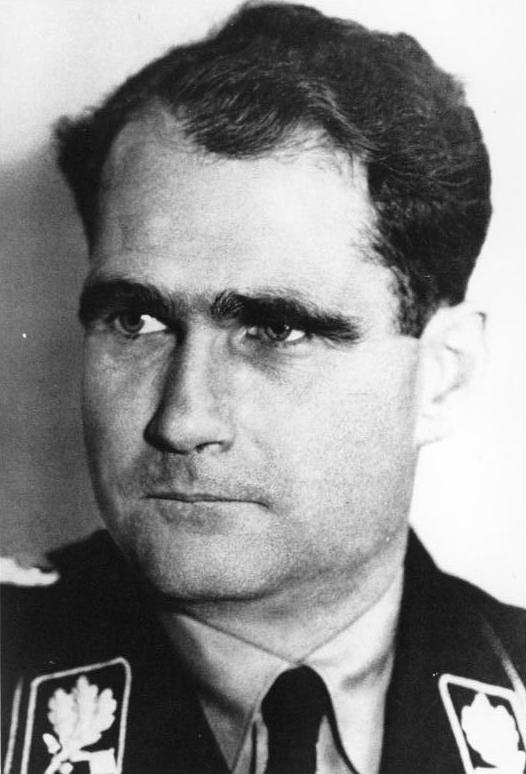
I first realized McCormick was a hoaxer because of the Rudolf Hess story in 17F, which has been reported dozens of times in the press but is utterly preposterous. In his 1966 biography of Fleming, John Pearson had described how, following the unexpected landing of the Deputy Führer in Scotland in May 1941, Fleming had contacted the infamous black magician Aleister Crowley:
‘This immensely ugly old diabolist and self-advertiser had thrown himself into certain more unsavoury areas of the occult with a gusto that must have appealed to Fleming, and when the interrogators from British Intelligence began trying to make sense of the neurotic and highly superstitious Hess [Fleming] got the idea that Crowley might be able to help and tracked him down to a place near Torquay, where he was living harmlessly on his own and writing patriotic poetry to encourage the war effort.’9According to Pearson, Crowley wrote a letter to the Director of Naval Intelligence offering to help, but nothing came of it:
‘It is a pity that this had to be one of Fleming’s bright ideas which never came off: understandably, there was hilarity in the department at the idea of the Great Beast 666 doing his bit for Britain.’10
The profusion of names, dates and sources were presumably to give credence to what is, on the face of it, a totally implausible story. McCormick claimed, for example, that Fleming and Crowley engaged in occult rites in Ashdown Forest involving a dummy dressed in a Nazi uniform on a throne-like chair. McCormick quoted at length on this ‘Amado Crowley, Aleister Crowley’s son’. He neglected to mention that Amado was in fact Andrew Standish, a writer on the occult who claimed to be Crowley’s secret illegitimate son and had changed his name as a result. Standish is generally recognized to have been a hoaxer himself.
 On reading this chapter, I immediately suspected it was pure fabrication. But two sources cited by McCormick gave me pause for thought: Peter Fleming and Sefton Delmer. Delmer was a well-known journalist who had been a major force in British propaganda and psychological warfare against the Nazis, and who had known Ian Fleming fairly well. Peter was Ian’s older brother, and also a veteran of several ingenious deception operations during the war, a few of them somewhat surreal (although nowhere near as surreal as this episode). In 1940, Peter Fleming had published a best-selling comic novel called The Flying Visit about Hitler dropping into Britain. According to McCormick, Ian Fleming had urged Peter to write the book, ‘doubtless seeing it as a possible means of signalling to the Germans that the British might talk if someone were lured to Britain – if not Hitler or Hess, then possibly Canaris’:
‘When Hess himself enacted Peter Fleming’s fictitious ploy, no doubt it secretly delighted Ian, but the sheer coincidence of The Flying Visit narrative and Hess’s arrival must at the same time have been somewhat embarrassing for him.And we have come full circle, back to the incident in John Pearson’s biography from which McCormick seems to have developed the entire story. McCormick footnoted his quotes from Delmer and Peter Fleming to issues of The Times from September 1969. I looked them up, and found that McCormick had omitted a rather salient fact: both Delmer and Peter Fleming had written about this incident in terms of dismissing an earlier telling of it. By none other than Donald McCormick.
However, there is no evidence that the brothers colluded in Ian’s secret operation. Peter Fleming stated long afterwards that Ian had not told him about ‘this idea’, which he described as ‘a new legend about my brother’. On the other hand, Sefton Delmer, who knew Ian Fleming well and had worked with him, commented: ‘As an idea, inducing Hess to fly to England by means of astrological hocus-pocus – and the bait of the Duke of Hamilton – was something that might have appealed to Ian Fleming, or even to have been conceived by him. I am quite ready to believe that.’
Later, anxious to stress that he had no knowledge of any such plans and, by implication, denying that his own novel had any connection with them, Peter Fleming affirmed that he did not believe ‘the elaborate ruses were ever carried out, or even planned’. None the less the undisputed fact remains that Fleming was anxious, once Hess had landed, to follow up his own hunches on the best way to handle him. He not only begged the authorities to allow Aleister Crowley to interview Hess, he even managed to persuade Crowley to offer his services for this purpose. Unfortunately the offer was not taken up…’11
In 1969, McCormick’s book A History of the British Secret Service was published under the pseudonym Richard Deacon. In it, he wrote that Ian Fleming had masterminded an operation to lure Rudolf Hess to Britain using fake astrological charts. Shortly before the book was published, The Times ran an article on this ‘remarkable claim’ but, very sensibly, sought out the opinions of Sefton Delmer and Peter Fleming on it. Both men dismissed McCormick’s story. Delmer admitted that the idea was the sort of thing that might have appealed to Ian Fleming, or even been conceived by him, as quoted above, but went on to say that he found the details of the story unconvincing:
‘It is all too pat and does not fit the fact that the flight on May 10 was not Hess’s first attempt to fly to Britain.’12Peter Fleming said that Ian had never mentioned the idea to him, and indeed called it ‘a new legend about my brother’ – ie a legend created by Donald McCormick. Three days later, Peter wrote a letter to The Times explaining in greater detail why he thought the story was nonsense:
‘Sir, -- I agree with Mr. Sefton Delmer that the idea of decoying the Deputy Führer of the Third Reich, with the aid of astrology, to rendez-vous with a Duke in Scotland during the opening phase of the German offensive in Europe in May 1940 was one that my late brother, Ian, might well have conceived. But he did not conceive it, nor do I believe that the elaborate ruses described by Mr. Deacon in his History of the British Secret Service were ever carried out, or even planned…’13Peter Fleming went on to explain that because he had written The Flying Visit, he thought it highly unlikely his brother would have neglected to mention to him that he had been involved with such a similar real-life event later on in the war. Peter did not mention, for security reasons, that he had himself been an important figure in deception operations during the war, so there was no question that Ian would not have trusted him with such information.
Ellic Howe, who had also been involved in deception and propaganda operations in the war, wrote to The Times on the same day to dismiss the story, reporting that he had discussed with Ernst Schulte-Strathaus, Hess’ supposed adviser on astrological matters, whether there might be any such esoteric background to the case, and he had said there wasn’t. In addition, Howe wrote, Schulte-Strathaus wasn’t Hess’ astrological adviser, ‘but merely talked to him occasionally about astrology’.14 Unfortunately, by discussing such nuances, Howe probably gave some readers the impression that there was something in McCormick’s story.
Undaunted by the three-pronged assault from Delmer, Howe and Peter Fleming, McCormick replied to The Times, insisting that he respected their views but asking them to wait for publication of his book before offering their final judgment on it.15
One of the advantages of fabricating information about intelligence operations is that it is very difficult for anyone to prove you wrong. It’s a further advantage if the people you’re making the claims about are dead, as Ian Fleming was in 1969. When McCormick revived his hoax 24 years later, Delmer, Howe and Peter Fleming had all since died. McCormick shamelessly quoted their dismissals of his fabrication as evidence to support it. In doing so, he altered some of their words. Peter Fleming wrote: ‘But he did not conceive it, nor do I believe that the elaborate ruses described by Mr. Deacon in his History of the British Secret Service were ever carried out, or even planned.’ McCormick altered this, for obvious reasons, quoting Peter Fleming as not believing ‘the elaborate ruses were ever carried out, or even planned’. No ellipses, either. In doing this, he was not simply misquoting Peter Fleming and disguising the context of his comments, which would have revealed that it was his story under discussion by Peter Fleming, and being dismissed by him. He was also subtly but offensively insinuating that Peter Fleming’s disbelief of his fabrication was in some way evidence that he had been covering up the ‘real’ conspiracy. This insinuation is in the words ‘anxious to stress’: he was suggesting that Peter Fleming had been protesting too much, and wanted to hide what had really happened.
In fact, Peter Fleming had had Donald McCormick pegged.

This was debunked by Teresa Burns in 2010, who wrote that McCormick’s 1968 book John Dee: Scientist, Geographer, Astrologer, and Secret Agent to Elizabeth I, written under the Richard Deacon pseudonym, ‘seems the source of the persistent printed and Internet legend that John Dee signed his name “007.”’:
‘Did Dee really sign his name this way? A painstaking search through many, many Dee signatures has convinced this writer that he did not. His real signature took many forms, but looks more like a whirlwind than a 007.This is a good description of McCormick’s technique: alongside genuine material correctly sourced, he added elements he had invented, citing fictitious but authoritative-sounding sources. Much of 17F is recycled material from his earlier works, sometimes barely repackaged and often only tenuously linked to Ian Fleming. His account of the failed plan to block the Danube in 1940 is the same as the one he gave in The Silent War: A History of Western Naval Intelligence, published under the pseudonym Richard Deacon in 1988, with hardly a word changed. There is some justification for that: Fleming was heavily involved in that operation, so it makes some sense to recap his research. But in many cases McCormick repeated material from his previous books that had nothing whatsoever to do with Ian Fleming, and simply repackaged them with Fleming now playing a central role in the incidents in question.
Yet even this writer has fallen for that non-fact. Deacon footnotes works of natural philosopher Robert Hooke (1635-1703), including his Posthumous Works presented to Sir Isaac Newton (which does actually exist) and an alleged work called An Ingenious Cryptographical System, which, though quoted in several scholarly and non-scholarly works since, and listed in two of them as being among the “Gwydir Papers, Manuscript Collection,” seems not to exist at all.
Yet for one who has studied much of the Dee material which has become available after 1968, Deacon’s book reads like a blurred, excited rehashing of ideas slightly out of focus and in the service of someone else’s ego: he footnotes here and there as if for kicks, referring to letters and legend one can find no record of, but weaving a story that is almost plausible…’17
The greatest example of this is chapter 9 of the book, which is about the celebrated SOE agent Krystyna Skarbek, better known as Christine Granville. McCormick had already written about Granville in both A History of the British Secret Service and Spyclopaedia, the latter published six years earlier, but in neither had he mentioned her in connection with Ian Fleming. In this chapter he repeated a lot of material about Granville from those books, and justified its inclusion in a biography of Ian Fleming by fabricating a story that Fleming had had an affair with her.
To bolster this story, McCormick presented several pieces of ‘evidence’. These included quotes and correspondence from Ed Howe, who had been a Kemsley correspondent in Istanbul. Howe and Granville had genuinely known each other, and perhaps it was this convenient fact that inspired McCormick’s tale, because it placed Granville a degree of separation from Ian Fleming. McCormick claimed that after the war Christine Granville had met Howe in Cairo and told him she was looking for work:
‘Howe told me: ‘As a long shot I gave her Fleming’s address, as I felt sure he would be interested in her – as a fascinating personality certainly and maybe as a correspondent somewhere or other.’’18McCormick did not provide a date or any other reference for this quote, so we have to take it on trust that he accurately recalled Howe’s words – and that Howe even said any such a thing at all. McCormick claimed that Fleming was interested in Granville, and quotes a letter from Ian Fleming to Howe about her:
‘She literally shines with all the qualities and splendours of a fictitious character. How rarely one finds such types.’19A letter by Fleming! If true, compelling evidence of a connection, at least. But it is not shown in the book. McCormick instead footnoted this quote, writing that the letter had been shown to him personally, and had been dated 12 May 1947. He did not reveal the current whereabouts of the letter, again leaving readers with just his word that it ever existed.
McCormick claimed Fleming met Granville for lunch at Bertorelli’s in London and that they went on to have an affair, his source being ‘one of Christine’s Polish friends’, Olga Bialoguski, who told him about it. Conveniently, Olga also revealed to McCormick that Granville was very secretive, often made up stories to cover her tracks so you could never know when she was telling the truth, and that she, Olga, was one of Granville’s only friends to know about the affair.
She’s also one of Granville’s only friends not to be mentioned in connection with Granville anywhere else. She has a convincingly Polish-sounding surname, though. It’s the same surname as Dr Michael Bialoguski, the Polish-born Australian agent who was instrumental in Vladimir Petrov’s defection in 1954, as related in the world’s press and by McCormick himself in his book Spyclopaedia, published a few years earlier. Perhaps Olga was related in some way to the doctor? If so, McCormick didn’t mention it. More likely, I think, is that McCormick wanted a second source, decided it would be a Polish friend of Granville’s and simply looked through his own work for a real Polish surname.
Olga also revealed to McCormick, in long fluent English quotes with no dates or other information given for them, that Granville had once confided to her that Fleming had taken her to a hotel named the Granville ‘somewhere in the region of Dover’. This brought back memories for McCormick, who recalled just such a hotel being mentioned in passing in Moonraker. After quoting the passage in question, he noted that ‘to introduce Christine to a hotel actually named after her would be just the kind of joke Fleming would enjoy.’20
Ian Fleming certainly knew of Christine Granville, as he mentioned her by name in The Diamond Smugglers when discussing different types of secret agents:
‘Then there are the colourful spies like Sorge, the brilliant, luxury-loving German who worked for Russia in Tokio, and girls like Christine Granville who was murdered by a love-crazed ship’s steward in a Kensington hotel in March 1952, after a fabulous record in wartime espionage for which she earned the George Medal.’21Granville was well-known, and Fleming knew of her, but there is no evidence anywhere other than in Donald McCormick’s book that Ian Fleming ever even met her, let alone had an affair with her. Considering the access that both John Pearson and Andrew Lycett had, and the thoroughness of their research, one would have expected them to have mentioned a connection with such a well-known woman. All the more so, as someone Ian Fleming did have an affair with was Blanche Blackwell. Pearson didn’t mention this at all in his biography, perhaps because Ian’s widow Ann was still alive at the time he was writing, as was Blackwell. Writing in 1996, long after all the parties were dead, Andrew Lycett revealed the affair and the extent of it. But he didn’t mention Christine Granville once. Writing in 1993, McCormick devoted a whole chapter to the supposed affair with Granville, his only evidence for which was oral testimony from a friend of Granville’s who has never been identified elsewhere and a letter from Fleming to Edward Howe never seen anywhere else. But Blanche Blackwell isn’t mentioned once in the book.
McCormick went on to theorize that Granville had been the model for Vesper Lynd in Casino Royale. His ‘evidence’ for this is very thin indeed. Yes, the description of Vesper sounds a little like Christine Granville, in that she was a beautiful dark-haired woman. The descriptions of Solitaire in Live and Let Die and Tatiana Romanova in From Russia, With Love are also rather similar. But there’s nothing out of the ordinary in the physical description of Vesper: she was standard fare for the genre.
McCormick noted that Vesper Lynd speaks French ‘like a native’, and that according to people who had known her, Granville was also fluent in French. But that’s hardly surprising for an SOE agent who was sent to France. McCormick reported that Granville thrived on disaster – just like Vesper in the novel. But that’s a passing comment from Bond, not a serious assessment of her character, and anyway, Vesper is also involved in espionage: one could say that James Bond thrives on disaster, too. McCormick also noted that Vesper is in love with a Pole in the R.A.F., while Granville had been great friends with a gallant Pole in the British Army (and was Polish herself). All of this is inconsequential, and a game that could be applied to dozens of people.
But McCormick did provide one piece of information that seemed to point firmly and unequivocally to Christine Granville. In the novel, Vesper tells Bond that she was given her unusual name by her parents because she had been born on a stormy evening. This, McCormick revealed, was a secret clue:
‘Further inquiries established the fact that Christine Granville was born on a stormy night and that her father gave her the nickname of ‘Vespérale’, or, as he himself explained, ‘qui a rapport au soir claret vespérale.’22
 McCormick provided a footnote for this, citing Madeleine Masson’s 1975 biography Christine: A Search for Christine Granville, but he didn’t provide the corresponding page number. There was a very good reason for that: that particular piece of information didn’t in fact appear anywhere in Masson’s book. Instead, Masson noted:
‘Count Jerzy was relieved when his daughter Krystyna, Christine, born in 1915, seemed to have inherited his own good looks.So the one piece of information McCormick gave that compellingly suggested Granville was the model for Vesper is not in the book McCormick claimed as his source for it. And instead, that book contradicts McCormick’s account, saying that her father nicknamed her Happiness and Star. And while vesper can refer to the evening star, that isn’t what McCormick wrote, and ‘Star’ is not a nickname one gives for being born on a stormy night.
From the start there was a complete rapport between father and daughter. He called her his ‘Happiness’ and his ‘Star’.’23
This false citation completely undermines McCormick’s claim Vesper was based on Granville, both because he falsified it and because the rest of his evidence is so flimsy: there were plenty of dark-haired French-speaking beauties before, during and after the war on whom Fleming could have based the character, and he also might not have based her on anyone. One could find details in the biographies of many women who could be linked in this sort of way to Vesper Lynd’s first name, her surname, her appearance, or lines snipped from Casino Royale. Vesper is also the name for common kinds of bat, sparrow and mouse. The daring, beautiful, dark-haired, French-speaking SOE agent Violette Szabo used a code based on Three Blind Mice. ‘Vespers’ are evening prayers in various denominations. SOE agent Nancy Wake grew up in a strict religious background, and was known to the Gestapo as The White Mouse. One could claim any woman was born on a stormy night, or was known by friends to attend evening prayers, or anything else. But without any credible evidence to substantiate a claim of an affair or that Fleming based the character on a particular person, such as correspondence or other material by Granville or Fleming, there would be no reason to believe any such theory.
Why choose Christine Granville? Well, McCormick already knew quite a lot about her, having written about her twice before, and he had presumably sensed already that she was a good subject for his audience: beautiful, heroic, and fascinating to the public. So I think he created the tale of the affair, and to support it he pointed to a book that didn’t contain the evidence he claimed it did, invented a letter from Fleming to a friend who had died, and added a mysterious Polish friend Olga, who nobody’s ever seen. Presumably, he was hoping that the footnote pointing to Masson would in and of itself seem authoritative, and that nobody would bother to look it up, or that if they did would soon give up looking when they couldn’t find the reference, presuming it was in the book somewhere or other. And he was right: a lot of people have taken him a face value. Not everyone was fooled, though. In 2006, John Griswold published an exhaustive examination of Fleming and his work, and did look up McCormick’s reference to Masson’s book. But, he noted, he ‘could not find this information stated anywhere within it’.24
In 2004, a Canadian company, Queen Fine Arts, bought the film rights to Masson’s biogaphy of Christine Granville. The following year a new edition of her book was published by Virago, now retitled Christine: SOE Agent and Churchill’s Favourite Spy. In a new afterword, Masson discussed some developments that had taken place since the book had first been published in 1975:
‘Once it became known that my researches might become the basis for a film, a tide of new information about Christine alerted me to the fact that there were lacunae in my book that would need further digging and verification.’ 25Chief among these lacunae was Granville’s SOE file, which had been declassified in 2003, the contents of which Masson discussed and quoted, and Donald McCormick’s claim that Granville had an affair with Ian Fleming, which Masson discussed at some length. She also mentioned the idea that Granville might have been the model for Vesper, noting their supposed similarities in appearance and that she tells Bond her name is the result of her being born on a stormy evening:
‘In fact, Countess Krystyna Skarbek was born on a stormy night, and her father, Count Jerzy Skarbek, had given his baby daughter the nickname Vespérale or, as he explained, ‘like the evening star’.
One of the many biographies of Fleming – Donald McCormick’s – majors on his affair with Christine. I cannot confirm that Fleming used Christine as the model for Vesper Lynd but there is a real passion in Fleming’s novel and his account of Vesper’s beauty and character adds up to a fair description of Christine.’ 26

Masson was in her nineties when she wrote this afterword, so allowances should be made. But there are several troubling aspects about it. Firstly, it seems that she didn’t dig very far or verify very much about this particular lacuna. She doesn’t seem to have realized that McCormick had given her as the source for Granville’s nickname being ‘Vespérale’ – or that that detail had not in fact been in her book. Instead, bizarrely, she repeated most of McCormick’s information, including the crucial detail he had supposedly got from her. More worrying is the way she did this: in the paragraphs before she mentioned McCormick. This gives the impression that she knew about the nickname some other way, omitting that her source was the same as for the affair she couldn’t confirm mentioned in the next paragraph. If she couldn’t confirm the affair, what was her evidence for the nickname? So in 1993 McCormick had disguised his fabrication by crediting Masson as his source when she wasn’t. And in 2005, Masson disguised the fact that she got all her new information about Fleming from… McCormick.
This isn’t anywhere near the same as McCormick’s fabrications, but it calls into serious question Masson’s reliability as a source on Christine Granville. Masson said she could not confirm the affair with Fleming – but devoted a couple of pages to it nevertheless. If she had been a thorough researcher, McCormick’s claims should have raised alarm bells at once, because: she herself was the cited source for the information; she wasn’t in fact the source for it; she hadn’t come across any evidence of an affair in writing the first edition of her book; and neither had any of Fleming’s other biographers come across it. In repeating McCormick’s story, she unwittingly extended his hoax beyond the grave. Now she can accurately be quoted as having mentioned the affair. (Her new edition also added one more myth to the mix: although the title now proclaimed Granville was ‘Churchill’s favourite spy’, that information is not mentioned at all in the book itself, let alone a reference for it cited.)
It is as a result of this sort of Chinese whispers that McCormick’s hoaxes about Ian Fleming and James Bond have survived to date. There’s a lot of other information in 17F that doesn’t appear in either John Pearson or Andrew Lycett’s biographies. Some of it is verifiably true, but in general the more interesting McCormick’s information, the harder it is to ascertain the source. In many cases, he simply states something as fact, as in that Charles Fraser-Smith was ‘unquestionably’ the brains behind Fleming’s Q Branch. Fraser-Smith certainly created ingenious gadgets during the Second World War, but he admits in his own memoir that he only knew Fleming slightly, and there were plenty of other boffins in British intelligence who worked in that line – SOE had a special workshop for them in Welwyn Garden City. McCormick also quotes a KGB file, apparently declassified after the fall of the Soviet Union, which discusses keeping an eye on Fleming’s work for any mentions of SMERSH, but gives no reference to the document’s whereabouts or reference number. There are dozens of such minor snippets of information in the book, many of which have been repeated and expanded on by other writers and in the process made firmer over the years. Unpicking them all would be impossible, but I hope that this article sheds light on some of McCormick’s most widely accepted myths and hoaxes about Ian Fleming and James Bond.
Notes
1. Will the real James Bond stand up? By Chris Jones, BBC News, November 22, 2002. Available from: http://news.bbc.co.uk/2/hi/in_depth/uk/2000/newsmakers/2503023.stm
2. Aleister Crowley’s lives by Jake Arnott, May 30 2009, The Daily Telegraph. Available from: http://www.telegraph.co.uk/culture/books/5407318/Aleister-Crowleys-lives.html
3. Larger than life adventures of a real Bond girl by Graham Stewart, The Times, November 18, 2006. Available from: http://www.timesonline.co.uk/tol/comment/columnists/graham_stewart/article640268.ece
4. Christine, the spy who loved Ian Fleming, gets her own movie by Jason Lewis, The Daily Mail, February 27, 2009. Available from: http://www.dailymail.co.uk/tvshowbiz/article-1145702/Christine-spy-loved-Ian-Fleming-gets-movie.html
5, 6, 7, 8. The Maybrick Hoax: Donald McCormick’s Legacy by Melvin Harris. Available from: http://www.casebook.org/dissertations/maybrick_diary/mb-mc.html
9, 10. pp117-118 The Life of Ian Fleming by John Pearson, Companion Book Club, 1966.
11. pp92-93 17F: The Life of Ian Fleming by Donald McCormick, Peter Owen, London, 1993.
12. Horoscope ‘lured’ Hess to Britain by Peter Hopkirk, The Times, September 15 1969.
13. Letter from Peter Fleming, The Times, September 18 1969.
14. Letter from Ellic Howe, The Times, September 18 1969
15. Letter from Richard Deacon, The Times, September 25 1969.
16. p203 17F, and ppx and 5 John Dee: Scientist, Geographer, Astrologer, and Secret Agent to Elizabeth I by Richard Deacon, Muller, 1968.
17. A Golden Storm: Attempting to Recreate the Context of John Dee and Edward Kelley’s Angelic Material by Teresa Burns, Journal of the Western Mystery Tradition, No. 19, Vol. 2. 2010. Available from: http://www.jwmt.org/v2n19/golden.html
18. p143 17F.
19. p141 17F.
20. p144 17F.
21. p54 The Diamond Smugglers by Ian Fleming, Pan, 1965.
22.p151 17F.
23. p7 Christine: A Search for Christine Granville by Madeleine Masson, Hamilton, 1975.
24. p60 Ian Fleming’s James Bond: Annotations and Chronologies for Ian Fleming’s Bond Stories by John Griswold, AuthorHouse, 2006.
25. p261 Christine: SOE Agent and Churchill’s Favourite Spy, Virago, 2005.
26. pp265-266 Christine: SOE Agent and Churchill’s Favourite Spy, Virago, 2005.